
Fencing that doesn't rust and ties by hand
AGROPET® is the high-tenacity polyester monofilament that replaces galvanised steel wire in fencing and the demarcation of agricultural and livestock plots. It doesn't rust, is dielectric and weighs about 5 times less than steel. It tensions at 1% with Gripple® or strainers and is tied by hand, with no cuts and no maintenance.
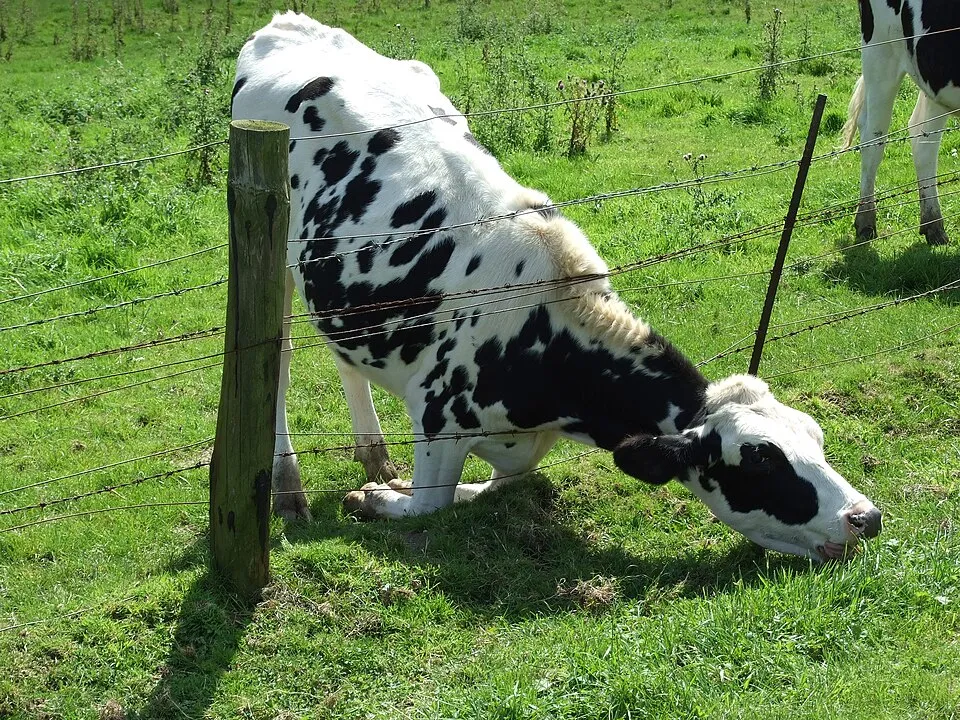
Fencing
Polyester fencing to mark out plots and manage livestock
The fencing with AGROPET® polyester thread serves to mark out plots, separate cropping blocks and guide or contain livestock without resorting to galvanised steel wire. Unlike metal, PET monofilament it doesn't rust: it is immune to damp, the salt air of coastal areas and contact with crop sprays, so it doesn't stain the posts or weaken over the years. It is recyclable and made in Europe by Textil Villa de Pego, S.L. (Pego, Alicante) to ISO 9001 and ISO 14001.
For livestock management, its dielectric nature is a key advantage: polyester does not conduct electricity, so a knocked-down wire or a fallen branch on the fence doesn't cause dangerous leakages. What's more, weighing only 1,36 g/cm³ —about 5 times less than steel— one coil yields far more metres per kilo, is transported and rolled out by a single person, and is tied by hand without pliers or cut-resistant gloves. It withstands UV radiation and works without becoming brittle from −40 °C to +90 °C, so it copes with the weather season after season.
- Rust-free: immune to damp, salt air and crop sprays; it doesn't stain the posts or need maintenance or replacement due to corrosion.
- Dielectric: polyester doesn't conduct electricity, so the fence creates no dangerous leakages for the livestock or the operator.
- 5 times lighter: at just 1,36 g/cm³, one coil yields more metres per kilo and a single person rolls it out and tensions it, with no machinery.
- Tied by hand: it tensions at 1% with Gripple® or strainers and is tied without pliers or cut-resistant gloves, speeding up installation and repairs in the field.
- European and recyclable: recyclable, UV-resistant and from −40 °C to +90 °C, made in Europe by Textil Villa de Pego, S.L. to ISO 9001 and ISO 14001.
Technical data
AGROPET® technical data for fencing
High-tenacity PET polyester monofilament. These are the recommended gauges for this application along with the product specifications, according to the official AGROPET® catalogue.
| Gauge (Ø) | Breaking load | Recommended use |
|---|---|---|
| 3 mm | 365 kgf | Intermediate lines of agricultural fences and plot demarcation; the most versatile gauge for light fencing. |
| 4 mm | 405 kgf | Livestock handling and containment fences; main lines that spread the tension between posts. |
| 5 mm | 616 kgf | Long perimeter fences, runs highly exposed to wind and enclosures of the highest demand. |
| Material | high-tenacity PET polyester |
|---|---|
| Gauges | 2,2 · 2,6 · 3 · 4 · 5 mm |
| Breaking load | from 215 kgf (2,2 mm) to 616 kgf (5 mm) |
| Elongation at break | 16,66 % |
| Service temperature | −40 °C to +90 °C |
| Melting point | 250 °C |
| Specific gravity | 1.36 g/cm³ |
| Optimal installation tension | 1% of the line length |
| Format | 10 kg spools, in white and crystal |
| Electrical behaviour | dielectric (doesn't conduct electricity) |
| Recyclability | recyclable |
| Certification | ISO 9001 and ISO 14001 (Bureau Veritas) |
Frequently asked questions